公開された理論へ接続する
DroRの支援が、公開された理論基盤に接続していることを確認します。
Papers
DroRのClinical Organizational Scienceページです。研究と実践を往復しながら、組織変革に必要な論点を整理します。

PAPER BRIEF
論文、引用情報、日本語解説を、社内説明や稟議時の第三者情報として参照しやすくします。
DroRの支援が、公開された理論基盤に接続していることを確認します。
組織変革を一過性の施策ではなく、構造的介入として理解します。
社内説明や稟議時に、第三者性のある情報として参照します。
PAPER READING MAP
査読済み論文、引用情報、日本語要約を、導入検討の前に確認できます。
理論の前提と主張を確認する。
構造と介入技法の関係を視覚的に読む。
DOI、書誌情報、外部掲載を確認する。
研究知がどの支援領域につながるかを見る。
PUBLIC EVIDENCE
DroRの方法論は、社内だけで語る独自理論ではありません。査読済み論文・外部配信・公式発表として公開されており、理論的背景をご自身で確認いただけます。
Peer-reviewed paper
Frontiers in PsychologyのOrganizational Psychologyセクションで公開されたConceptual Analysis論文を、研究基盤として参照できます。
EurekAlert!とPR TIMESで、論文情報、公開日、DOI、研究概要をご覧いただけます。
COSの中核技法と高度専門BPOを接続し、診断、構造設計、運用定着までを一体で説明できるサービス構造に整理しています。
External records
External science release / EurekAlert! / 2026-05-07 Clinical Organizational Science proposes a structural explanation for why organizations resist change AAAS運営のEurekAlert!に掲載された外部向け研究リリース。COSを、行動変容だけでなく相互作用構造の問題として説明しています。 Official announcement / PR TIMES / 2026-05-07 株式会社DroR、臨床組織科学(COS)を国際学術誌で発表──組織変革を「行動変容」から「構造的介入」へ再定義 国際学術誌でのCOS論文公開を知らせる公式発表。Frontiers論文、著者、公開日、ライセンス、事業概要を確認できます。 Method commentary / PR TIMES / 2026-05-07 組織変革はなぜ「元に戻る」のか──COSが組織の安定を「能動的に再生産される動的状態」として再定義 COSの考え方を、組織変革が元に戻る理由と構造的介入の観点から説明した公式発表。 Method commentary / PR TIMES / 2026-05-07 組織は機械ではなく複雑適応系である──COSが依拠するComplex Adaptive Systemとしての組織観 組織をComplex Adaptive Systemとして捉えるCOSの前提を説明した公式発表。 Official certification list / 内閣官房 国土強靱化推進室 / 2026-03-31 国土強靱化貢献団体認証 レジリエンス認証 新規取得団体一覧 2026年3月31日付の新規認証取得団体一覧に、株式会社DroRがレジリエンス認証取得団体として掲載されています。 Certification / PR TIMES / 2025-12-23 株式会社DroR、レジリエンス認証(事業継続および社会貢献)を取得 事業継続計画(BCP)と社会貢献の取り組みを、外部認証として確認できる公式発表。 Partner / PR TIMES / 2025-05-30 株式会社DroR、「マネーフォワード クラウド」の導入支援を本格化 マネーフォワード クラウドの導入支援体制と、IT導入補助金2025対象ツール登録に関する公式発表。 Service / PR TIMES / 2025-04-24 “弱み”を捨てない経営──新時代のBPOを本格展開【株式会社DroR】 高度専門BPOの提供背景を紹介した公式発表。研究実践と日常実務を接続するサービスの考え方をご覧いただけます。PAPER FIGURES
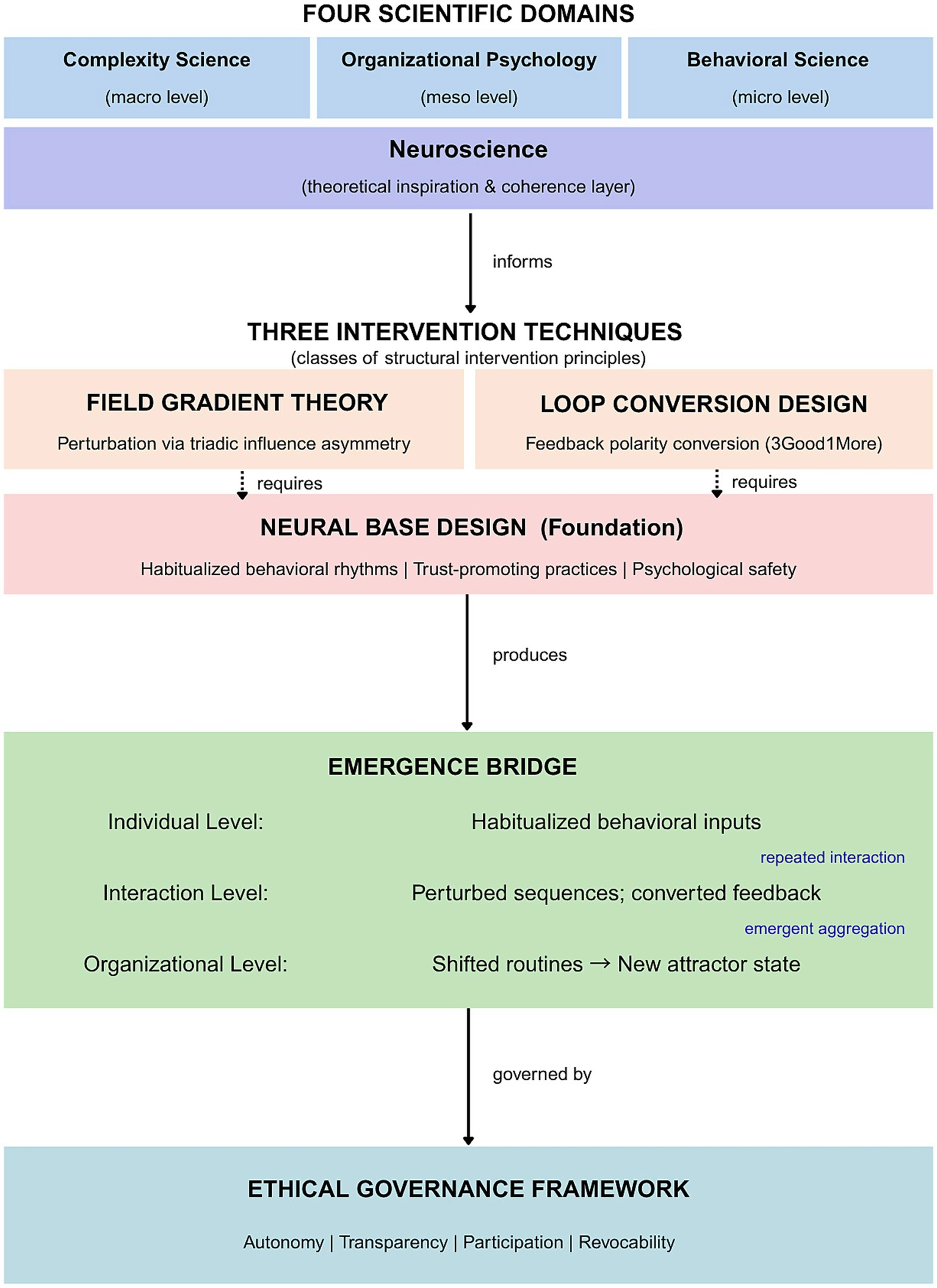
臨床組織科学(COS)の全体像、介入技法、個人・相互作用・組織レベルの接続を、Frontiers掲載図表に基づいて確認できるようにしています。
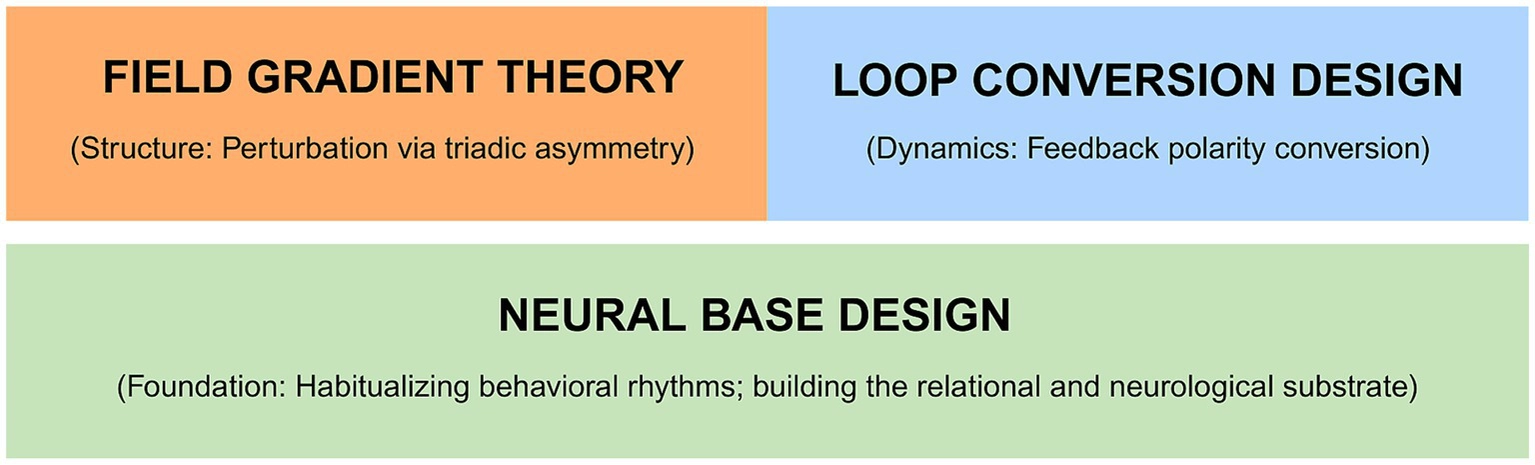
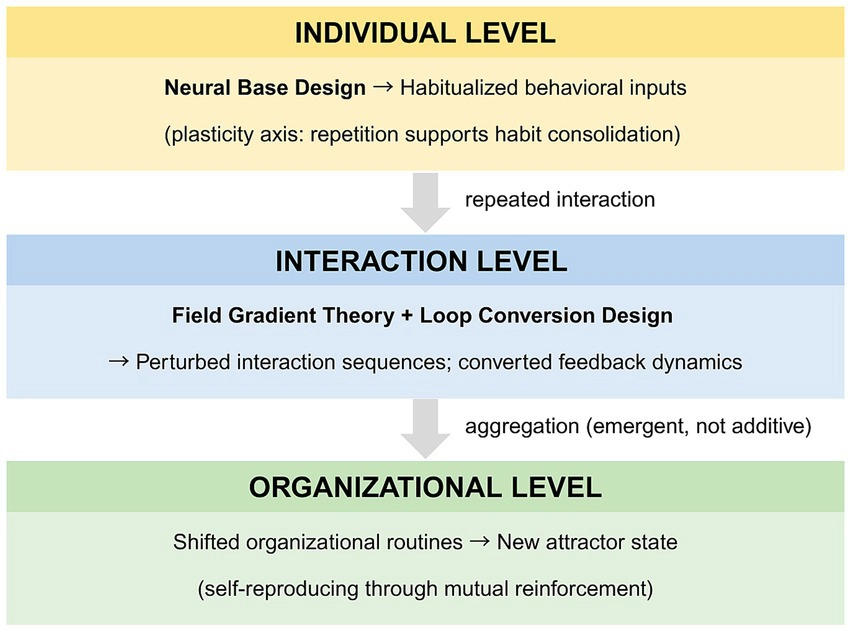
Source: Makoto Yamanaka, Masaya Nakamori (2026), Frontiers in Psychology, DOI: 10.3389/fpsyg.2026.1827324, Creative Commons Attribution License (CC BY).
Organizations frequently fail to sustain transformation despite substantial investment in leadership development, cultural change programs, and structural redesign. Existing frameworks tend to treat organizational stability as passive inertia rather than as an actively and recursively reproduced dynamic state.
This paper introduces Clinical Organizational Science (COS), an integrative framework that addresses this gap by specifying the structural mechanisms through which organizational stability is generated and through which durable transformation can be induced. Drawing on complexity science, neuroscience, organizational psychology, and behavioral science, COS proposes a multilevel mechanistic account—the emergence bridge—connecting individual behavioral habituation to organizational-level attractor transition.
Three structured intervention techniques are presented—Field Gradient Theory, Loop Conversion Design, and Neural Base Design—each operationalizing a distinct structural mechanism with specified theoretical foundations and failure conditions. Illustrative patterns consistent with the framework's theoretical predictions are discussed across behavioral, relational, and organizational levels, with explicit acknowledgment of their conceptual rather than evidentiary status. An ethics framework governing neuroscience-informed organizational intervention is also proposed.
COS offers a theoretically grounded conceptual framework that repositions organizational transformation from a behavioral change project to a structural intervention problem, accompanied by testable propositions and directions for independent empirical investigation.
Clinical Organizational Science · organizational change · organizational transformation · psychological safety · organizational development · organizational intervention · structural intervention · complex adaptive systems
| Journal | Frontiers in Psychology |
| Section | Organizational Psychology |
| Volume | 17 (2026) |
| Article Type | Conceptual Analysis |
| DOI | 10.3389/fpsyg.2026.1827324 |
| Received | (date) |
| Accepted | April 15, 2026 |
| Reviewers | Three anonymous reviewers |
| License | CC BY 4.0 (Open Access) |
| Word Count (main text) | 7,642 |
| Figures / Tables | 3 / 1 |
Correspondence concerning this article should be addressed to Makoto Yamanaka, DroR Corporation, Tokyo, Japan. Email: research@dror.co.jp
Both authors contributed to the development of the Clinical Organizational Science framework. Makoto Yamanaka led the primary intellectual development of the framework and intervention techniques. Masaya Nakamori led the drafting of the manuscript and contributed to theoretical elaboration, academic writing, and critical revision. Both authors reviewed and approved the final version.
This paper presents a framework developed through practice at DroR Corporation. Both authors are organizational practitioners at DroR, and the conceptual illustrations in Section 4 were developed by the same practitioners who designed the framework. This constitutes a structural conflict of interest that is addressed through explicit acknowledgment throughout the paper and through the transparency and revocability principles of the ethical governance framework presented in Section 5.
A Japanese-language summary and commentary on this paper is available.
Yamanaka, M., & Nakamori, M. (2026). Clinical Organizational Science: An Integrative Framework for Structural Intervention in Complex Organizations. Frontiers in Psychology, 17. https://doi.org/10.3389/fpsyg.2026.1827324
Full citation formats (BibTeX, RIS, EndNote)
RESEARCH TO PRACTICE
論文や概念の理解にとどめず、経営課題、組織診断、変革テーマの設計へ接続して検討できます。
RELATED PAGES